Charley
Charley, Willy Loman's next-door neighbor, is the one figure in Death of a Salesman who sees Willy clearly—his failures, his self-deceptions, his desperation—and yet never abandons him. A large, slow-speaking, immovable man, Charley offers Willy a job, regular loans disguised as poker winnings, and blunt truths that Willy cannot bear to hear. He is the play's quiet realist, a man who has succeeded not by charm or grand dreams but by steady, unglamorous work, and whose final eulogy for Willy—"a salesman is got to dream, boy. It comes with the territory"—stands as the play's most compassionate and devastating summary of the salesman's condition.
Identity and Background
Charley is introduced as a man of few words and laconic demeanor, dressed in a robe over pajamas when he first appears in Willy's kitchen late at night. He lives next door to the Lomans, in a house so thinly walled that Willy's sneezes blow hats off in Charley's home. He is a successful businessman who runs his own office, employs a secretary named Jenny, and has raised a son, Bernard, who will argue cases before the Supreme Court. Unlike Willy, Charley never boasts about his success or his son's achievements; when Bernard leaves for Washington, Charley simply counts out money on his desk and says, "He don't have to—he's gonna do it." His salvation, he tells Willy, is that "I never took any interest in anything."
Relationship with Willy: Patience, Pity, and Frustration
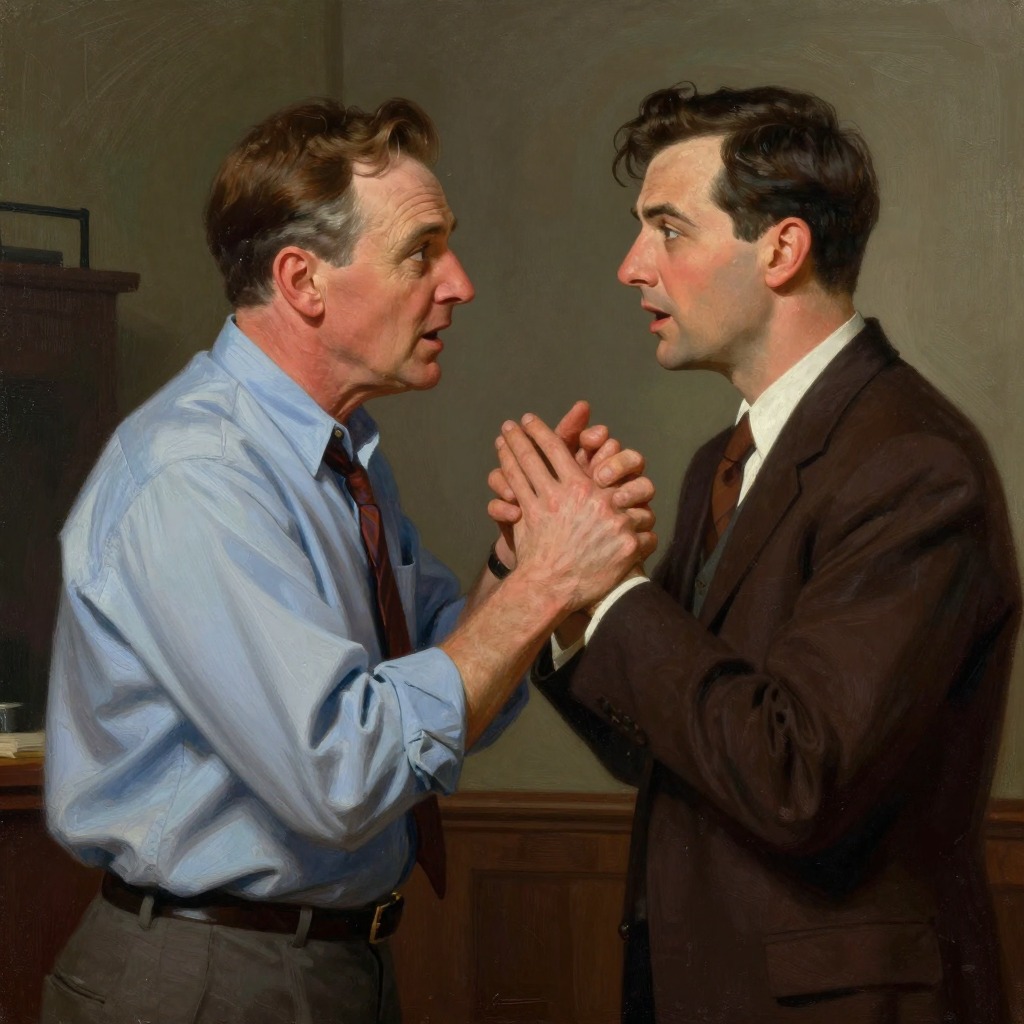
Charley's relationship with Willy is defined by a weary, unsentimental compassion that Willy constantly rebuffs. When Charley finds Willy playing cards in the middle of the night, he sits down to play, knowing it will tire Willy out. He offers Willy a job—fifty dollars a week, no road work—multiple times, and each time Willy refuses, insisting he already has a job even after Howard Wagner has fired him. Charley endures Willy's insults—being called an "ignoramus," "disgusting," a man who "can't handle tools"—without retaliating, though he does push back: "Don't call me disgusting, Willy." When Willy, desperate for money to pay his insurance premium, finally admits he has been fired, Charley does not gloat. He simply hands him the money and says, "Take care of yourself. And pay your insurance."
The Pragmatic Philosopher
Charley articulates the play's most unillusioned wisdom about the nature of selling and of life. When Willy insists that being well-liked and impressive should guarantee success, Charley counters: "The only thing you got in this world is what you can sell." He points out that J. P. Morgan was not impressive—"In a Turkish bath he'd look like a butcher. But with his pockets on he was very well liked." When Willy, after being fired, muses that "you end up worth more dead than alive," Charley replies flatly: "Nobody's worth nothin' dead." His philosophy is grounded in the concrete: a man needs to work, to earn, to pay his bills. He has no patience for Willy's grandiosity or self-pity, but he never abandons him.
The Requiem: Charley's Final Judgment
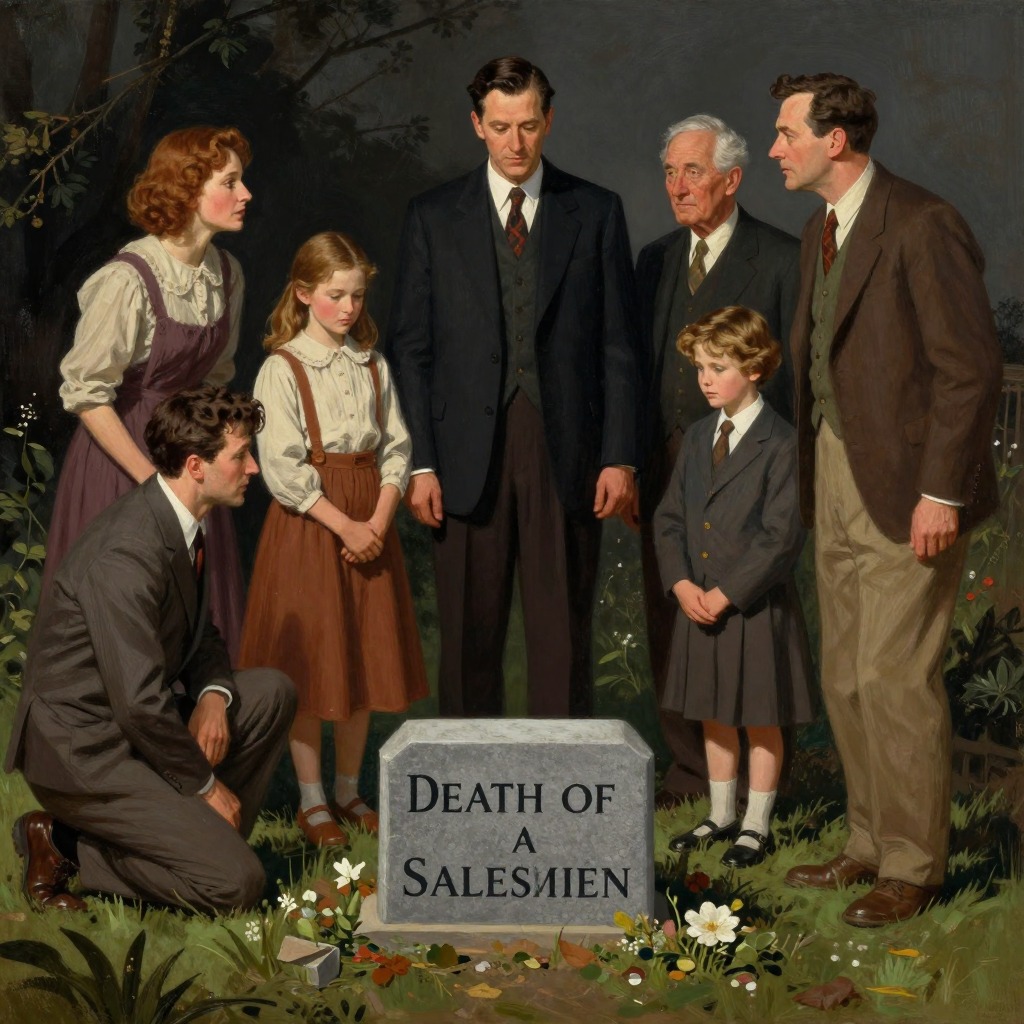
At Willy's funeral, Charley delivers the play's most famous and defining speech. Standing at the grave as Linda mourns the absence of mourners, Charley explains Willy's life to Biff: "Nobody dast blame this man. You don't understand: Willy was a salesman. And for a salesman, there is no rock bottom to the life. He don't put a bolt to a nut, he don't tell you the law or give you medicine. He's a man way out there in the blue, riding on a smile and a shoeshine. And when they start not smiling back—that's an earthquake. And then you get yourself a couple of spots on your hat, and you're finished. Nobody dast blame this man. A salesman is got to dream, boy. It comes with the territory." This speech, the only moment in the play where Charley speaks at length, transforms him from a mere neighbor into the play's choric voice, the one who understands that Willy's tragedy is not personal failure but the structure of the salesman's life itself.
Narrative Role and Thematic Significance
Charley serves as the play's foil to Willy Loman. Where Willy chases the illusion of being well-liked, Charley builds a real business. Where Willy's son Biff is lost and drifting, Charley's son Bernard becomes a Supreme Court lawyer. Where Willy borrows money he cannot repay, Charley lends without expectation. Yet Charley is not a cold success story; he is the only friend Willy has, and he knows it. When Willy, on the verge of tears, says, "Charley, you're the only friend I got. Isn't that a remarkable thing?" Charley's only response is a quiet, pained "Jesus!" He represents the possibility of a decent, functional life built on hard work and honest relationships—a life Willy could have had but rejected because it lacked the glitter of the dream. Charley's final words at the grave, insisting that a salesman must dream, acknowledge that even the most pragmatic man recognizes the necessity of illusion in a profession that sells nothing but itself.